

Sup everyone! Laura Cough, Internet Lizard’s Firstborn Daughter here, and welcome to your weekly-ish Automaton Lunch post, where I bring you random and obscure fun facts about Luke Vincent’s titles, from the Willful to Walk! A polar bear stole my laptop and brutally mauled last week, but my poppy bought me a new one so I can continue this series! He still hasn’t paid for my medical bills though…
Today, we’re returning to Harold’s Walk with an interesting technical quirk present in a few places throughout the game – the existence of CSGBox3D nodes in various levels. Since very few of you know what that actually means (even I didn’t know what they meant until a few seconds ago when my poppy told me about them), allow me to explain.
Nodes are Godot’s equivalent to game objects. Different nodes are used in different ways for different purposes, and every Godot game is built up of anywhere from nine or ten to hundreds of thousands of nodes. I’ll spare you the full rundown of how Harold uses them (especially because I need more to talk about later), but to cut a long story short, the level’s entire geometry tends to exist as its own node, with elements like Bytes, Crowns, and sheep being separate nodes placed on top of the geometry.
There are some strange exceptions to this rule, though, and the ones we’re gonna cover today are these elements right here;
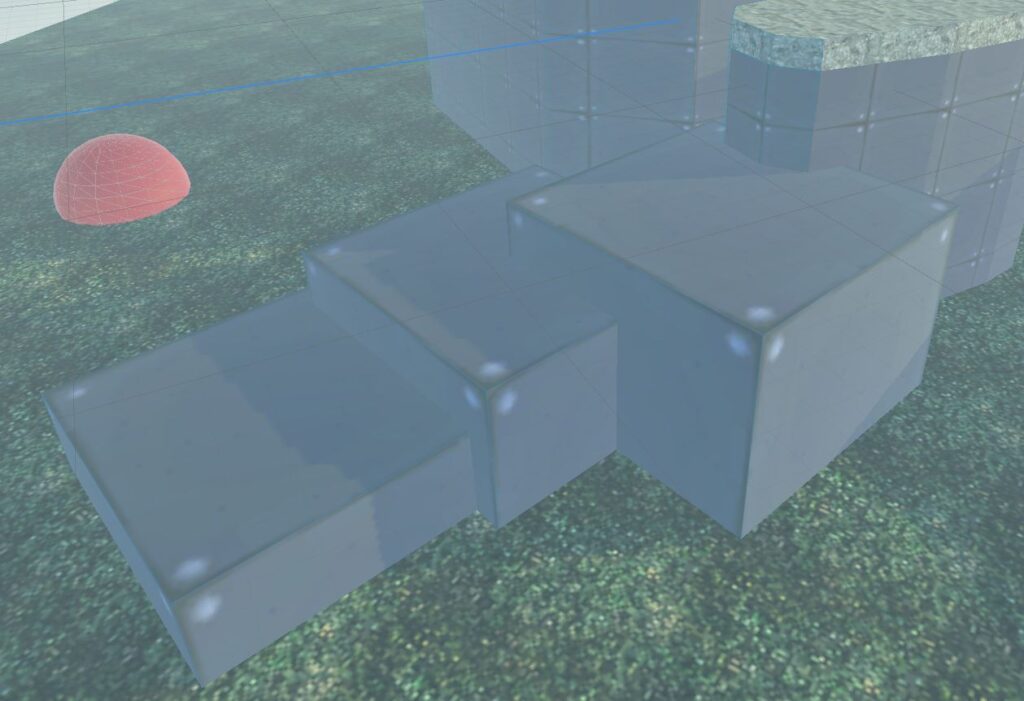
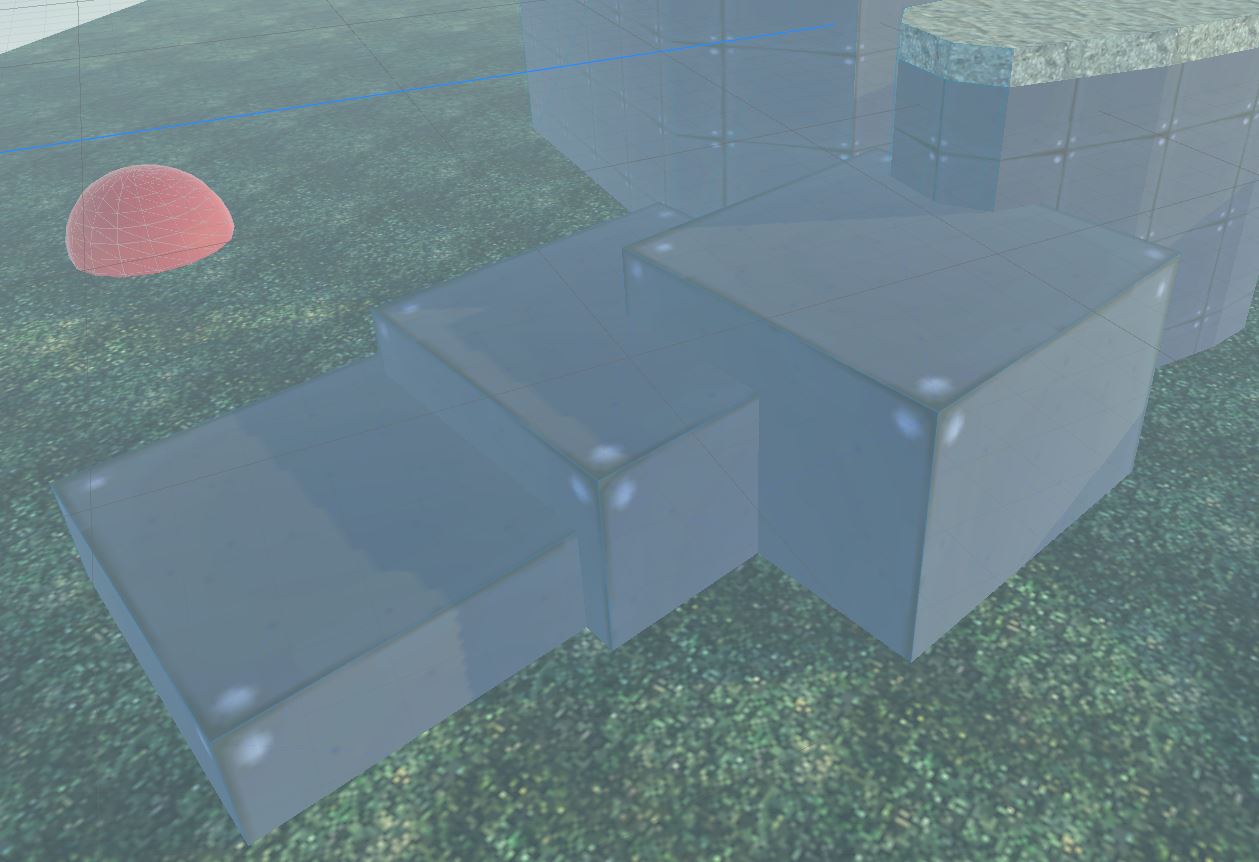
This is a CSGBox3D. This one in particular has been given a special texture as you can see; they normally are just completely grey when first spawned in.
These nodes are present in a few places throughout the game, most notably Water Tower and the glass in Harold Statue. This would normally be a pretty uninteresting thing to cover, but there’s a key detail about these I left out – they’re typically only used for prototyping. Turns out, these elements aren’t intended to act as level geometry, as they have a high CPU performance cost to be able to render. A MeshInstance3D with a BoxMesh with the same dimensions would’ve served the same purpose and, in fact, been better for this.
To be fair, the performance loss from using these is negligible in Harold’s case. The game is optimized well enough that levels still load quickly, even with these boxes here.
In any case, it seems that Luke figured out that this wasn’t best practice pretty shortly though, as these nodes stopped being used later in development. It’s possible that these also were intended only for prototyping, and were never removed by the time the game shipped. Maybe there were actually more of these present in earlier development that did get sacked as they stopped being needed. Either way, it’s a fun thing for us as modders (or just technically savvy players [or people who have no idea what’s going on right now]) to look back on.
Short and sweet one today, my head has actually started bleeding profusely and poppy is taking me to the E.R because he thinks I may have a concussion. He’s right, I definitely do and I’m seeing some very strange things right now, but at least I’m still in working enough order to write this article about Harpalyke, Luke’s most popular game by far. Tune out next Tuesday as we deep-dive into every technical detail of Prisoner #3774, Vuke Lincent’s Smash-Hit 3D open-world RPG gaem.
Sneeze oujm,,,,,,,,,,,,,,,,,,,,,,,,,,,,,,,,,,,,,,,,,,,,,,,,,,,,,,,,,,,,,,,,,,,,,,,,,,,,,,,,,,,,,,,,,,,,,,,,,,,,,,,,,,,,,,,,,,
Leave a Reply
You must be logged in to post a comment.